Seventy-three percent of law firms are invisible to AI search for the same root cause. Schema, E-E-A-T, off-site footprint – those are the symptoms competitors keep telling you to fix. The cause is one layer underneath, and most firms never reach it.
The “Four Causes” Framework Is Misleading
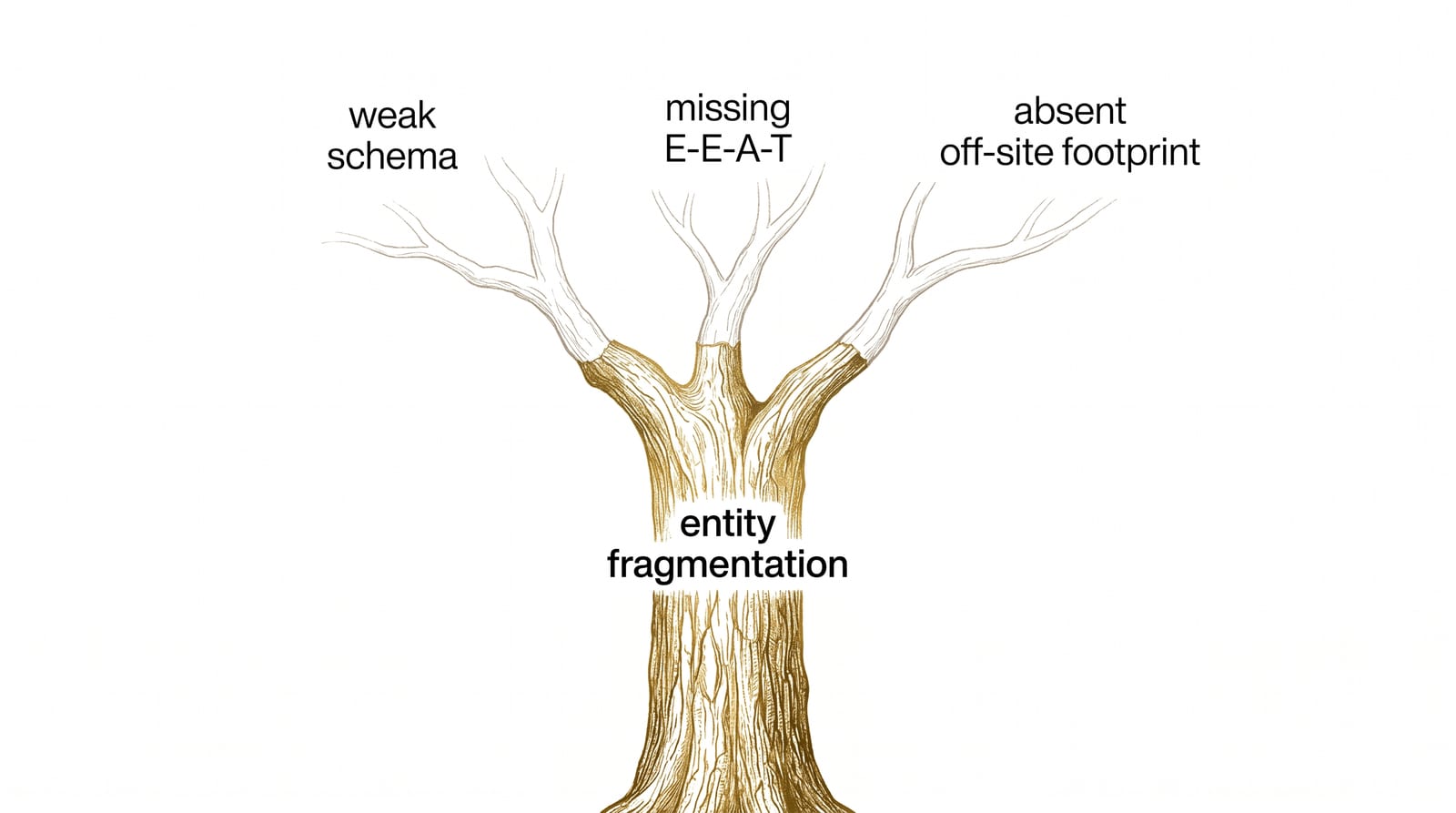
The four reasons firms aren’t cited by ChatGPT aren’t four separate problems. They’re one root cause (entity fragmentation) with three downstream symptoms.
Every ranking guide on this topic lists the same four reasons your firm isn’t appearing in AI search: entity fragmentation, weak schema, missing E-E-A-T author signals, absent off-site footprint. The numbers are real. Industry data from LovedByAI shows entity fragmentation hits 73% of firms, weak schema 68%, missing E-E-A-T 61%, and absent off-site footprint 54%.
What the guides get wrong is treating these as four parallel problems requiring four parallel fixes. They aren’t. Three of them are downstream of one.
Weak schema markup is what entity fragmentation looks like in your structured data. Missing E-E-A-T author signals is what entity fragmentation looks like at the byline. Absent off-site footprint is what entity fragmentation looks like across third-party directories. Same problem, three projections.
The reason this matters operationally: if you treat the symptoms one at a time, the root keeps generating new ones. You fix the schema this quarter, the off-site footprint next quarter, the byline after that. By the time you’re done, the directory entries have drifted again. Most boutique firms are paying agencies to chase symptoms in rotation.
Fix the entity, and the symptoms collapse together.
What Entity Fragmentation Actually Is
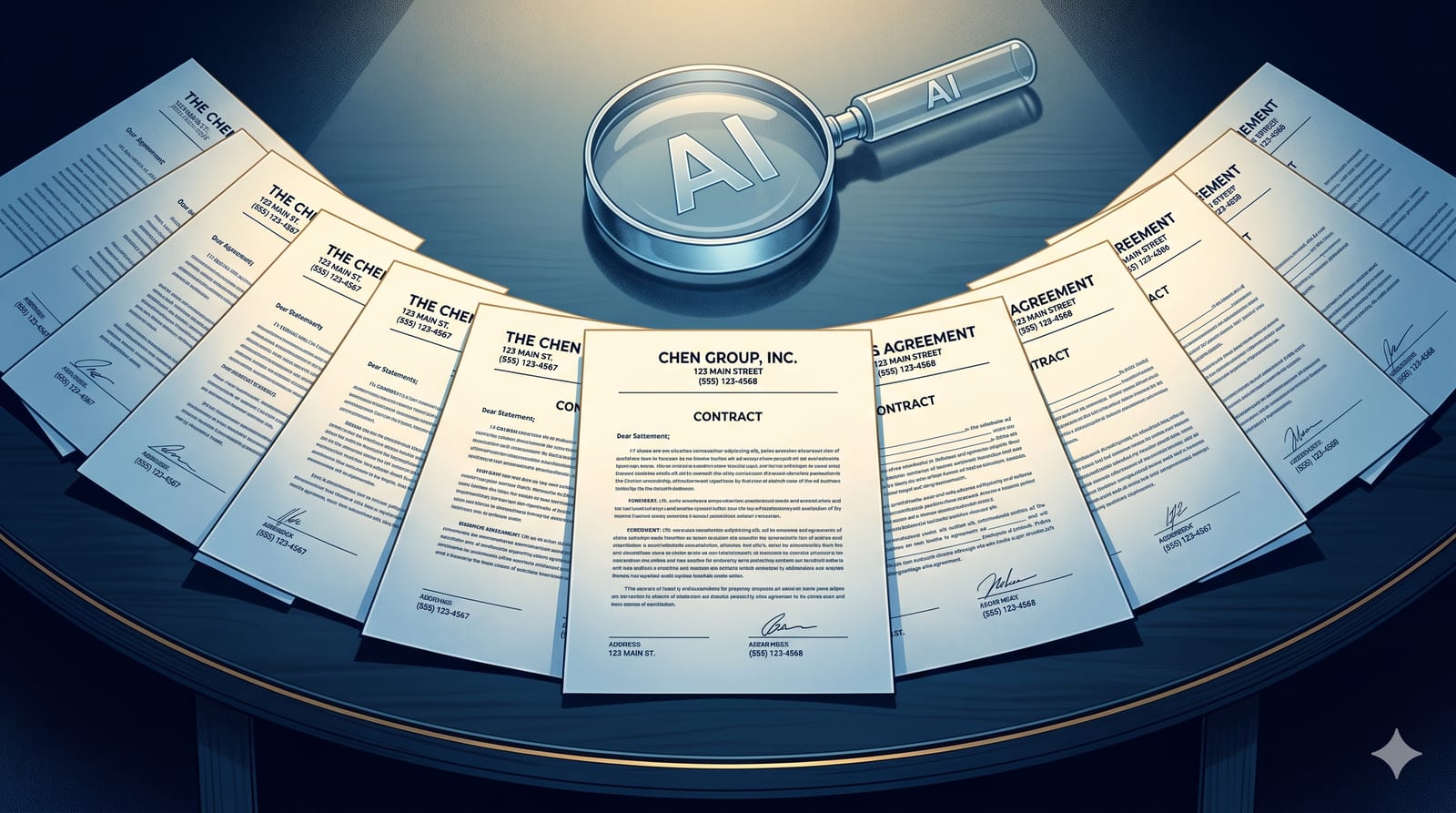
Entity fragmentation is when AI engines cannot confidently identify your firm because your digital footprint contains conflicting NAP, business names, or schema references across the web.
AI search platforms aren’t reading your website the way a person does. They are trying to map entities – clearly defined things they can verify, cross-reference, and trust. When ChatGPT or Perplexity decides whether to recommend your firm, the question it answers first is “is this firm exactly who they say they are, and can I prove it across multiple independent sources?”
That trust check fails the moment the firm shows up differently on different surfaces. The building’s old name on Avvo. A slightly different business name on Martindale-Hubbell, added when a senior partner retired and the entity reformed. A third variation in the firm’s own website footer because nobody updated it after the rebrand. Bar profile uses the formal corporation name. Press releases use the trade name.
None of these references is wrong individually. Collectively they describe four different firms.
To the AI system, that ambiguity is disqualifying. It cannot confidently say which one is real, so it doesn’t say any. It defaults to recommending a directory listing where the canonical record sits unambiguously, even if the directory entry is for a discount competitor.
The diagnostic test is short. Search your firm’s full legal name through ChatGPT. Search it through Perplexity. Search through Google AI Overviews. If the answers disagree about who you are, or if they cite a directory in your place, you have entity fragmentation. You’re in the 73%.
Why This Hits Boutiques Hardest (And Why That’s Reversible)
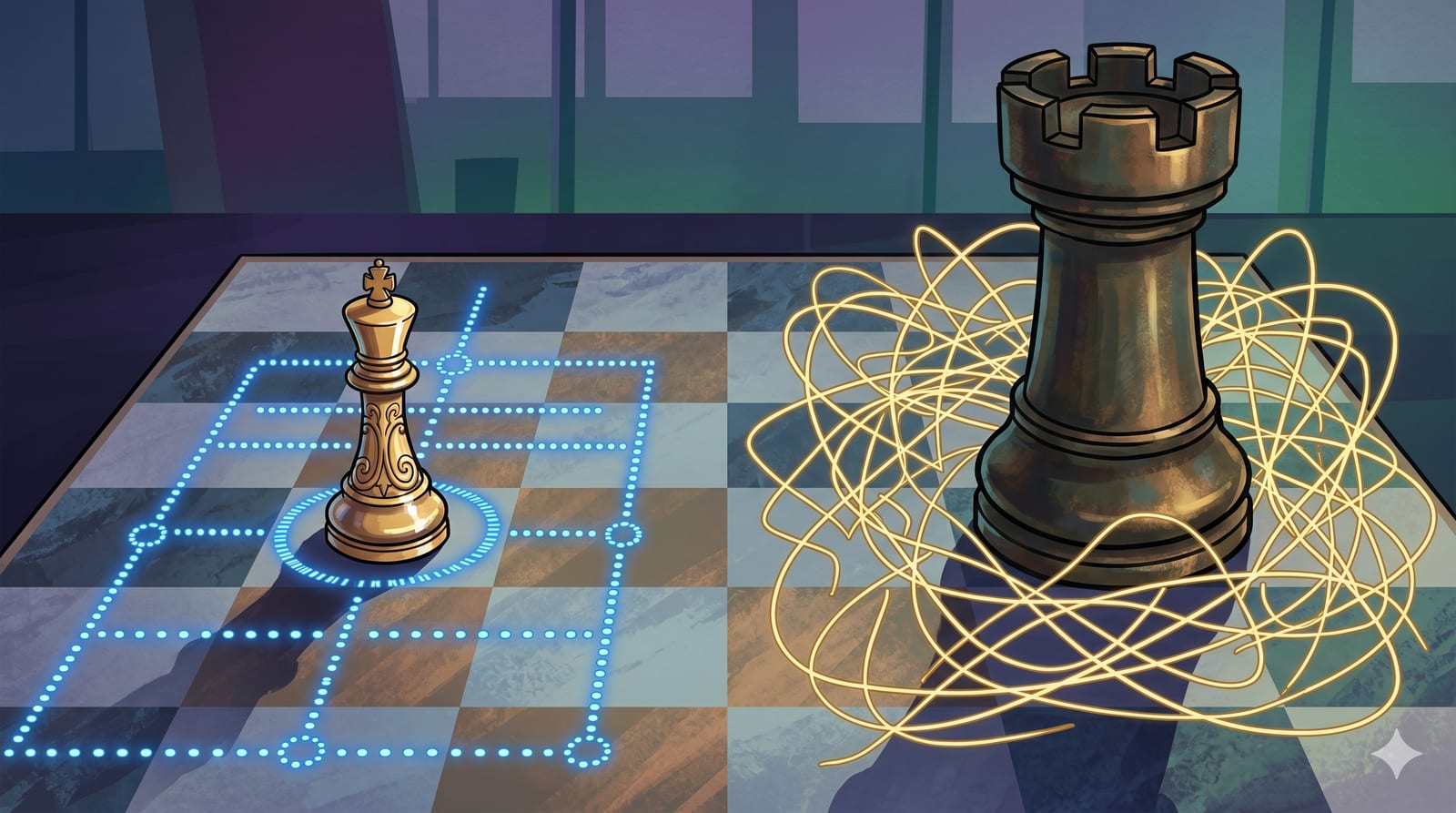
Boutiques can’t brute-force around entity fragmentation with marketing spend the way Big Law can – but once they fix it, simpler organizational structure becomes an algorithmic advantage.
Big Law firms with hundreds of attorneys across dozens of offices have entity fragmentation too. Often worse than boutiques. They survive it through brute force: massive marketing budgets, overwhelming domain authority, and sheer directory volume. Per the Best Lawyers analysis, AI engines weight large authoritative directories as fallback “sources of truth” when they can’t cleanly resolve a specific firm. Big Law lives in those directories at sufficient density that some signal gets through.
A boutique doesn’t have that buffer. There is no marketing budget that papers over fragmented entity data when you’re 12 attorneys, one office, one practice area.
But the inverse is also true. Once a boutique resolves its entity consistency, it gains an algorithmic advantage Big Law can’t easily match. As LovedByAI puts it: “a solo practitioner with a simple, perfectly consistent digital footprint will routinely surface above a massive regional firm that has five different addresses scattered across the internet.”
JustLegal Marketing reaches the same conclusion from the other direction: AI systems prioritize topical depth and entity consistency over marketing budget. A tightly-structured boutique routinely outperforms a disjointed regional firm in AI citation.
Translation: this is a rare problem where smaller wins, once smaller fixes the underlying issue.
How to Diagnose Entity Fragmentation In Your Firm
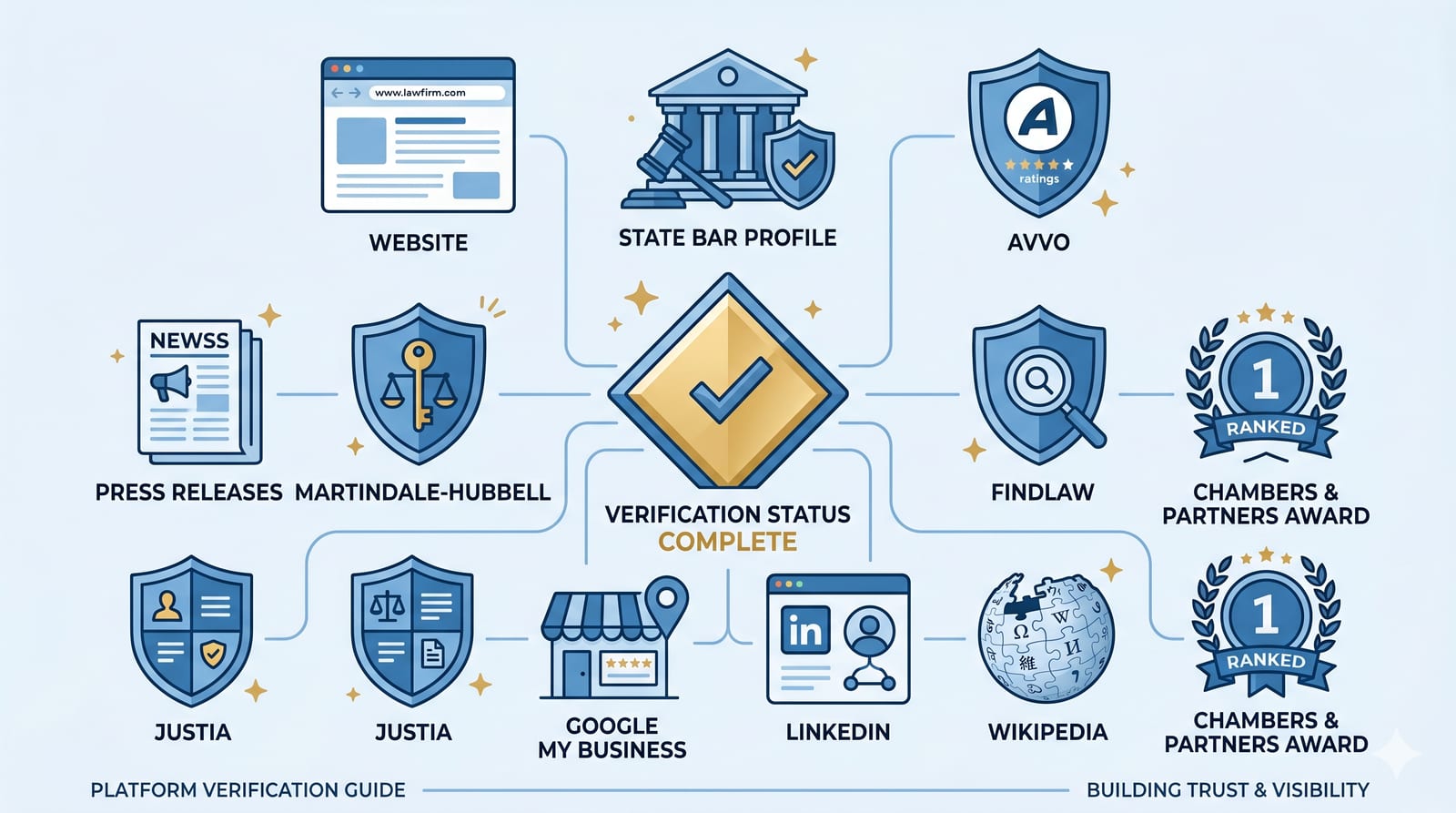
A boutique entity fragmentation audit checks eleven surfaces. Most firms can complete it in one afternoon with a junior researcher.
You don’t need to commission a consultant or buy a platform to run this audit. The 11 surfaces a complete diagnostic covers:
- Your own website (every page that mentions the firm name, address, or phone)
- Bar profile (Integrated Bar of the Philippines, US state bars, UK Law Society, AU Law Society, depending on jurisdiction)
- Avvo
- Martindale-Hubbell
- FindLaw
- Justia
- Google Business Profile
- LinkedIn (firm page, not individual attorney pages)
- Wikipedia (if the firm has an entry)
- Press releases and media mentions
- Practice-area-specific directories (e.g. Chambers and Partners, Legal500, IBP listings, US Lawyers.com)
For each surface, capture exactly four data points: legal business name, address (street + city + country), phone number, and the firm’s website URL. List them in a spreadsheet.
The output is binary. Either the four data points match across all 11 surfaces, or they don’t. If even one surface has a different business name, a different phone, or a different building address than the others, you have entity fragmentation.
In our diagnostic work with a Manila tax-controversy boutique, we found 11 surfaces describing four different firms. None of the variations was wrong on its own. The building had been renamed three years prior. The corporation had reformed when a senior partner retired. The website footer was updated late. Each individual reference was current and accurate. Collectively, the firm was invisible to AI search.
How to Fix It (Sequenced 90-Day Playbook)
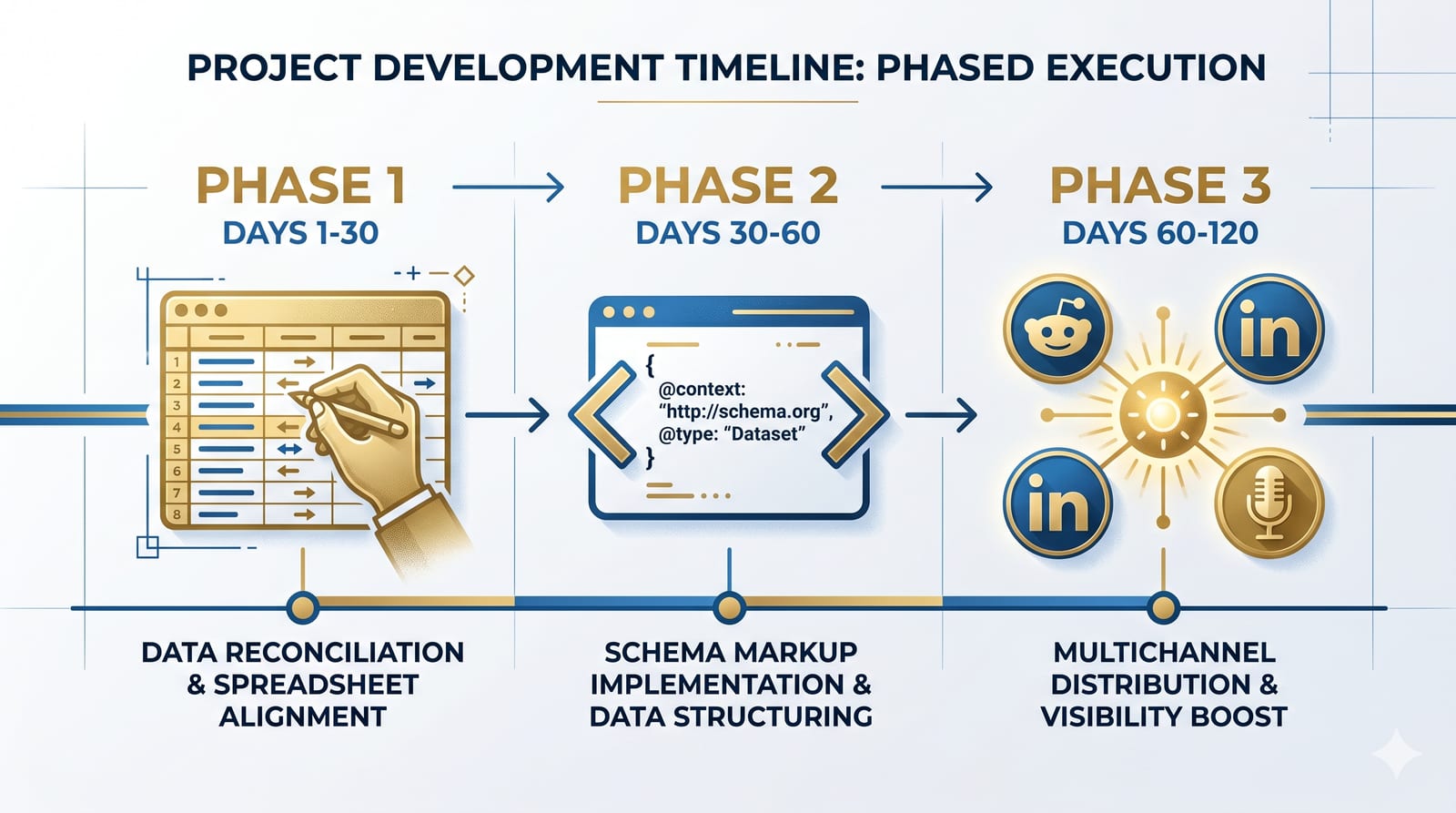
Reconcile NAP across all surfaces first. Then deploy LegalService and Attorney schema with verified sameAs links. Then build cross-platform citations over 60 to 120 days.
The fix is sequenced because each step depends on the one before. Skipping phases is the most common reason firms pay agencies for six months and see no AI citation improvement.
Phase 1 (Days 1-30): NAP reconciliation. Pick one canonical version of the firm’s legal business name, address, and phone. Update every one of the 11 surfaces to match exactly. This is unglamorous, manual, and is the single highest-impact action. Per industry data, NAP reconciliation alone resolves the citation problem for a meaningful share of firms before any schema work is even considered.
Phase 2 (Days 30-60): Schema deployment. Add LegalService, Attorney, and FAQPage schema markup to the firm’s website. The critical addition most boutique sites miss: sameAs links from the firm’s schema pointing to its verified bar profile, its Avvo profile, its Martindale-Hubbell page, and its LinkedIn firm page. These sameAs links are what AI engines use to confirm the entity is unified across sources. Lexicon Legal Content calls these out specifically as the AI-citation signals traditional SEO retainers usually skip.
Phase 3 (Days 60-120): Cross-platform citation building. Now that the entity is unified and machine-readable, build third-party validation by participating authentically on Reddit (in practice-relevant subreddits), publishing thought leadership on LinkedIn, and seeking named-attorney podcast appearances. Per Search Engine Land, Reddit, YouTube, and LinkedIn are the dominant off-site sources AI engines cite from.
Set expectations carefully with the firm’s leadership. AI citation latency runs 60 to 120 days for ChatGPT and Perplexity once the entity work is complete, with Google AI Overviews moving faster at 30 to 60 days when freshness signals are present. There is no “rank tomorrow” version of this work.
The Regulatory Constraint: PH CPRA as Worked Example
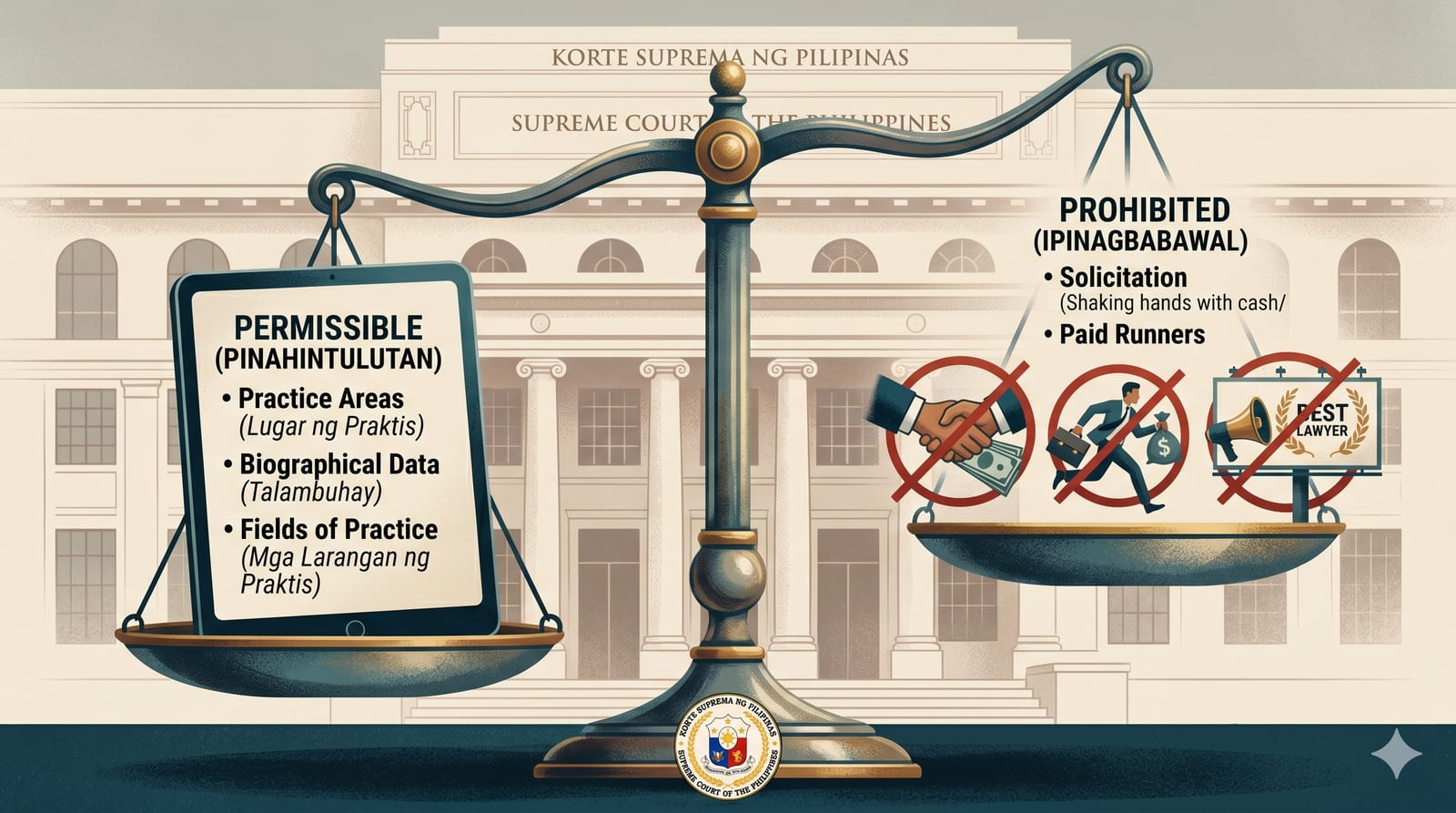
Most jurisdictions allow dignified educational content and forbid solicitation. Entity-consistency work is descriptive, not promotional, and falls cleanly inside what’s permitted.
A managing partner reading the playbook above will surface a reasonable objection: bar rules. “Are we allowed to do this?” The honest answer is: yes, almost certainly, and we can show you why.
Take the Philippine Code of Professional Responsibility and Accountability (CPRA), Section 17. The Supreme Court text is explicit. Lawyers shall not, directly or indirectly, solicit legal business. Lawyers shall not pay any media practitioner for publicity intended to attract legal representation. In no case shall the permissible advertisement be self-laudatory.
What CPRA permits is also explicit: dignified, verifiable, factual information including biographical data, contact details, fields of practice, and services offered. That is exactly what entity-consistency work consists of. Reconciling a firm’s correct legal business name across the 11 surfaces is verifiable factual information. Adding LegalService schema to declare the firm’s practice areas is biographical-data-shaped. None of it is solicitation. None of it is paid placement for publicity. None of it is self-laudatory.
The same logic applies in jurisdictions with similar rules: the US Model Rules of Professional Conduct (Rule 7.1-7.3 series), the UK Solicitors Regulation Authority Code of Conduct, the Australian Legal Profession Uniform Conduct Rules. Each forbids solicitation and undignified promotion. Each permits factual self-identification.
The boutique firms that hear “we can’t market under bar rules” and stop are protecting themselves from a risk that the rules themselves don’t actually create.
What Happens After the Fix
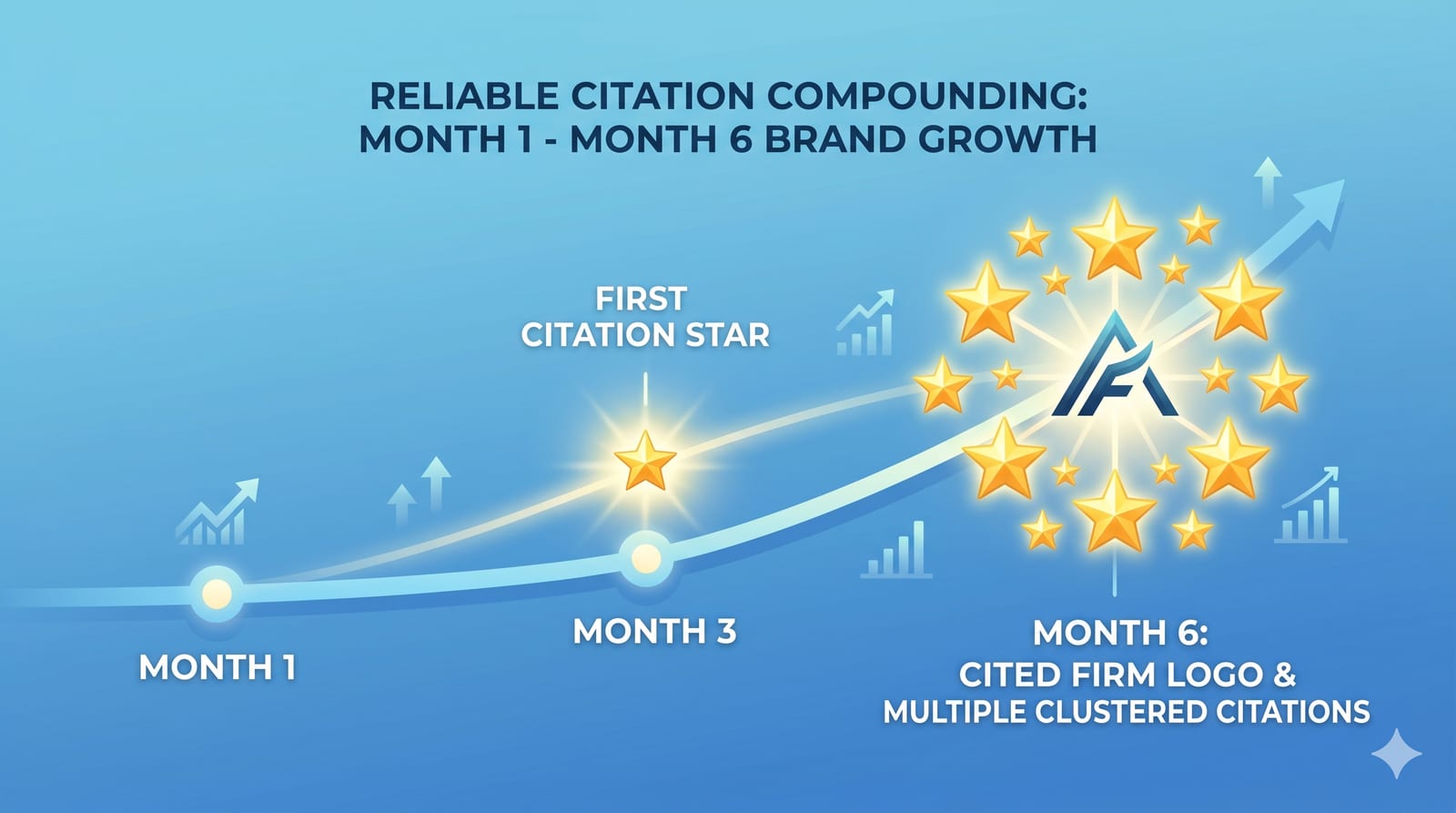
Within 60 to 120 days of resolving entity fragmentation, most firms see their first AI citations for priority practice-area queries. The pattern is reasonably reliable now that the mechanism is understood.
The signal you’re looking for is small but specific: at month three, AI Overviews on one of your priority practice-area queries cites your firm by name rather than defaulting to a directory listing. The first citation matters more than the share-of-voice number. It means the AI now considers your firm a verifiable entity.
By month six, the metrics that matter shift. Track AI citation share-of-voice across ChatGPT, Perplexity, and Google AI Overviews. Track the gap between your organic ranking share and your AI citation share. A healthy firm has those numbers approaching each other. A firm with residual fragmentation has citation share lagging ranking share, which is the signature signal that the entity work isn’t fully complete yet.
And track the second-order metric that actually matters: referral verification. The 2026 Martindale-Avvo consumer report found that 41% of legal consumers now start their lawyer search with AI assistants rather than Google – up from 12% in 2024. That includes referred clients verifying their referral. A firm that fails the AI verification step loses warm referrals before they ever make the first call, and the referrer never hears why.
The firms that fix entity fragmentation in 2026 are positioning for the next decade. The ones that keep treating symptoms in rotation are paying agencies to do work that doesn’t compound.
What’s Next
If your boutique firm isn’t being cited in AI search, the next step is not “produce more content.” It is “audit who AI thinks you are.”
The 11-surface audit framework above is the diagnostic. Two hours of a junior researcher’s time will tell you whether you have entity fragmentation or not. If you do, the 90-day playbook works.
If you’d rather have us run the audit and rebuild the entity-consistency layer for you, Engine Fix is built for exactly this. We rebuild the trust signals AI engines actually read, inside your jurisdiction’s regulatory framework, with monthly citation and mention reporting.
Frequently Asked Questions
Why is my law firm not showing up in ChatGPT?
The primary cause, affecting 73% of firms, is entity fragmentation. AI platforms cannot confidently verify your firm’s identity across the web due to conflicting data or a weak off-site footprint. To get cited, you must combine authoritative attorney-written content with advanced structured data (LegalService and Attorney schema with sameAs links) so AI engines understand exactly who you are. (Source: LovedByAI, 2026)
How long does it take to get cited in AI Overviews and ChatGPT?
Resolving entity fragmentation and schema issues typically takes 60 to 120 days to reflect in ChatGPT and Perplexity citations. Google AI Overviews may respond slightly faster at 30 to 60 days, especially when content is updated with fresh statistics or direct answers. (Source: LovedByAI, 2026)
What’s the difference between SEO and GEO for law firms?
Traditional law firm SEO focuses on optimizing for keywords and backlinks to rank higher in search engine results pages and earn website clicks. GEO (Generative Engine Optimization) shifts the focus to structuring content with clear answers, schema markup, and consistent off-site entity signals so that AI platforms actually cite and recommend your firm in their synthesized responses. (Source: JustLegal Marketing, 2026)
Why is my firm being routed to directories instead of cited?
AI platforms default to massive legal directories like Avvo or FindLaw because they act as safe, trusted central sources of truth when an individual firm’s entity data is fragmented or unverified. If your own site lacks strong E-E-A-T signals, specific attorney schema, and unique proprietary insights that directories don’t have, the AI will bypass your firm and funnel the user to a directory instead. (Source: Metricus, 2026)
How do I check if my firm is being cited by AI?
Manually test your top practice area queries across ChatGPT, Perplexity, and Google AI Overviews to observe whether your firm is recommended or cited. Third-party SEO platforms like Ahrefs Brand Radar, SE Ranking’s AI Overview tracker, and Semrush’s AI Visibility toolkit also provide automated, granular data on your citation share-of-voice compared to competitors. (Source: growlaw.co, 2026)
Why is Big Law getting cited and boutique firms aren’t?
Large national firms often secure AI citations through massive domain authority, extensive directory coverage, and pervasive digital footprints that help AI verify their entity. Boutique firms can close this gap by resolving their own entity fragmentation and publishing highly specialized jurisdiction-specific content with perfect technical schema. AI systems prioritize niche expertise over sheer marketing budget. (Source: pain mine analysis cross-validating JustLegal Marketing + Clio, 2026)
Does AI invisibility affect referred clients too?
Yes. The modern legal consumer journey almost always includes a verification phase where even referred clients turn to AI assistants to research the firm before the first call. If your firm lacks strong third-party reviews, consistent directory profiles, or verifiable credibility signals, AI verification can filter you out and the referrer never hears why the prospect went elsewhere. (Source: Esquire Interactive, 2026 + Martindale-Avvo, 2026)
By Mark Buraga, Founder, Growth Engine PH. Last updated 2026-05-13.
Work with us: explore Growth Engine PH SEO services, built to earn AI citations and rankings.
Related reading: What is SERP optimization and the 6-Block GEO Diagnostic.