The 38% number is the one that should worry every boutique partner reading this. Seven months ago, 76% of pages cited in Google AI Overviews also ranked top-10 organically. Today that overlap is 38%. Whatever signal AI uses to choose who gets recommended, it isn’t your rank anymore. And the firms still measuring themselves on rank alone are being filed elsewhere without knowing it.
What AI Overviews Are Doing to Legal Search Right Now
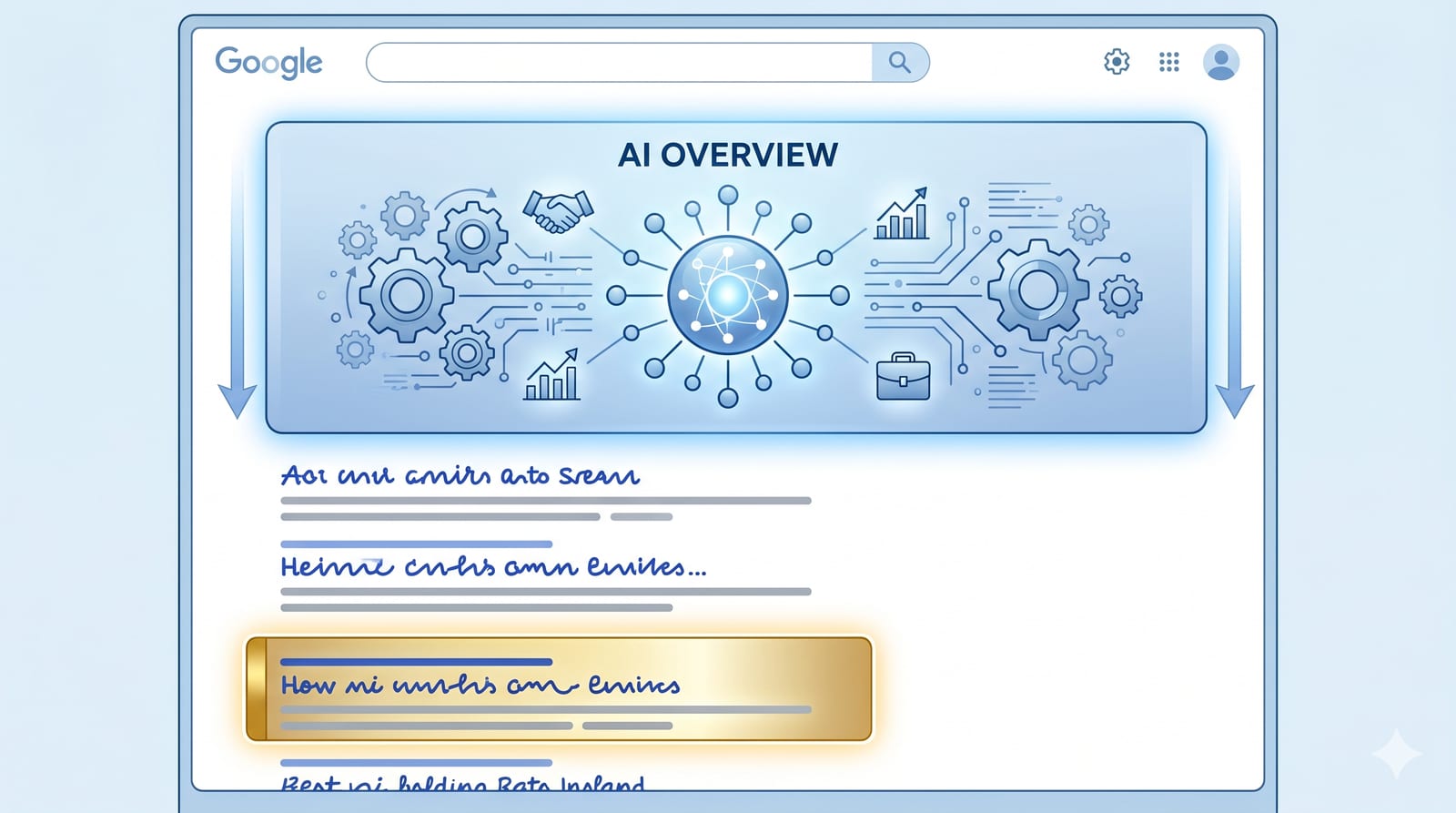
Legal queries trigger AI Overviews 77.67% of the time, the highest rate of any industry. When the AI cites someone, it is rarely citing whoever ranks #1.
Of every industry that uses search, legal is the most exposed to AI Overviews. According to JustLegal Marketing, 77.67% of legal queries trigger an AI Overview, more than any other vertical. When prospects ask about practice areas, jurisdictions, or representation, AI is answering first, in-place, citing a small handful of trusted sources.
The other shoe is what falls below the AI Overview. A site that used to sit in the #1 organic position can lose up to 79% of its traffic when an AI Overview appears above it (Best Lawyers). Position 1 specifically loses 58% of its clicks (Clio). Informational query CTR dropped from 1.76% to 0.61%, a 61% collapse (Dataslayer).
These are visible costs. Partners can see them in Google Search Console. They prompt the wrong question, which is how do we get our clicks back? The right question is what happened to the clients who didn’t click, and where they went instead.
The Hidden Cost: Pricing Power Collapse
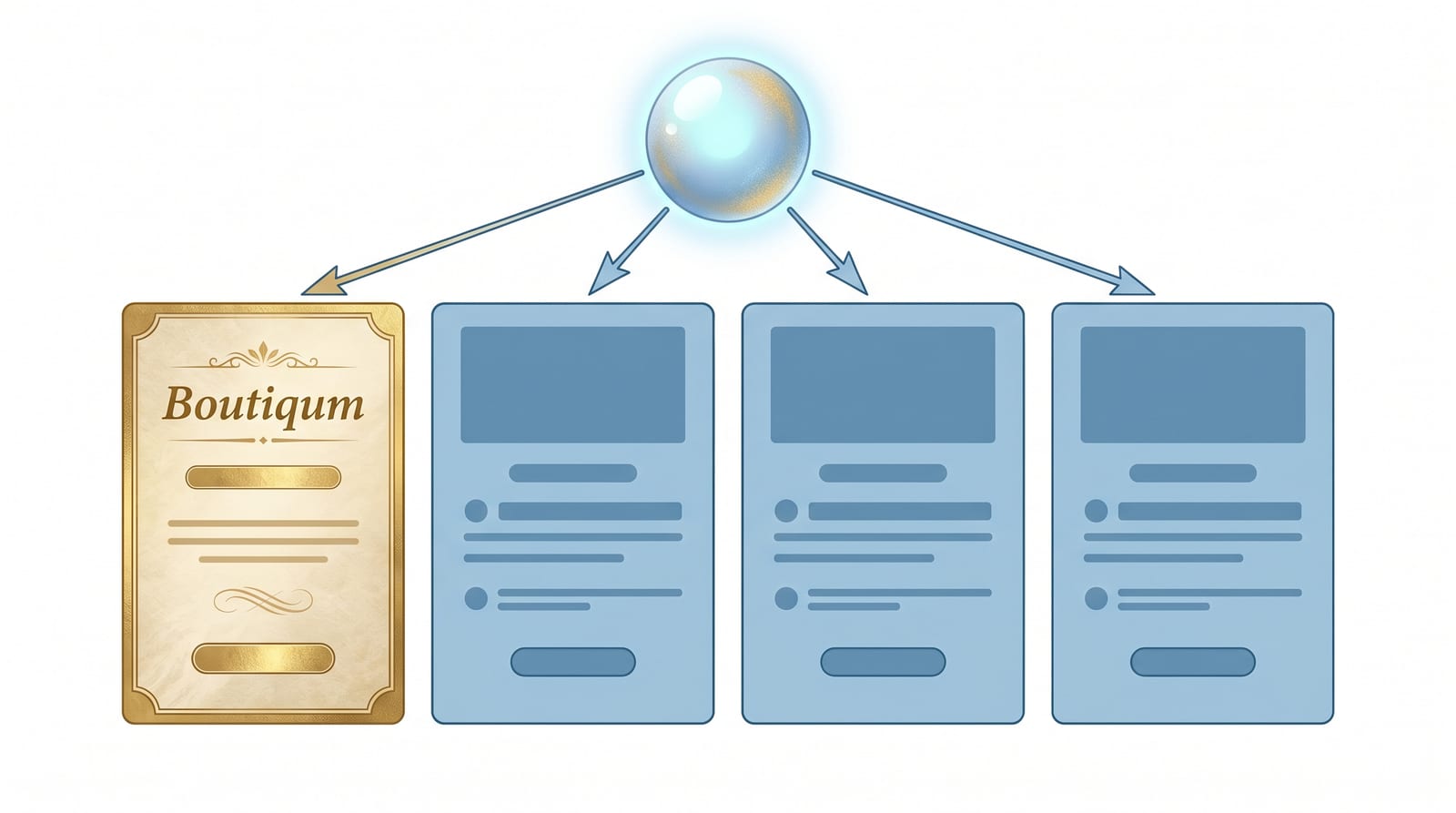
Uncited firms aren’t just losing clicks. They’re being routed to directory listings where they compete on price against discount peers.
The visible cost is CTR. The invisible cost is more damaging.
When AI search can’t independently verify your firm’s credentials, it doesn’t recommend “no one.” It recommends somewhere it trusts. For legal queries, the somewhere is almost always a legal directory. Per Metricus’s industry analysis, “AI chatbots function as a funnel to legal directories and platforms, not to the attorneys who actually provide legal services, with intermediaries capturing the AI visibility and individual practices being invisible” (Metricus, 2026).
This sounds like a SEO problem. It isn’t. It’s a pricing problem.
When a prospective client lands on a directory listing instead of your firm’s own site, three things shift at once. They see your firm in a comparison grid against firms they have never heard of. They see ratings and review counts as the proxy for quality. They see a price-per-consultation column. The directory’s design is for comparison shopping, not for relationship-building. The boutique that competes on partner attention and bench depth is suddenly visible to that prospect as a price line item next to a discount competitor who bid for placement.
The CTR loss is recoverable. The pricing model isn’t, once that habit forms.
This is what makes AI invisibility a P&L issue, not a marketing issue. Partners watching their hourly rate slide against directory-listing competitors are looking in the wrong place when they ask their marketing team for an answer. The directory funnel is the answer. The fix is structural.
Why Ranking #1 Doesn’t Save You
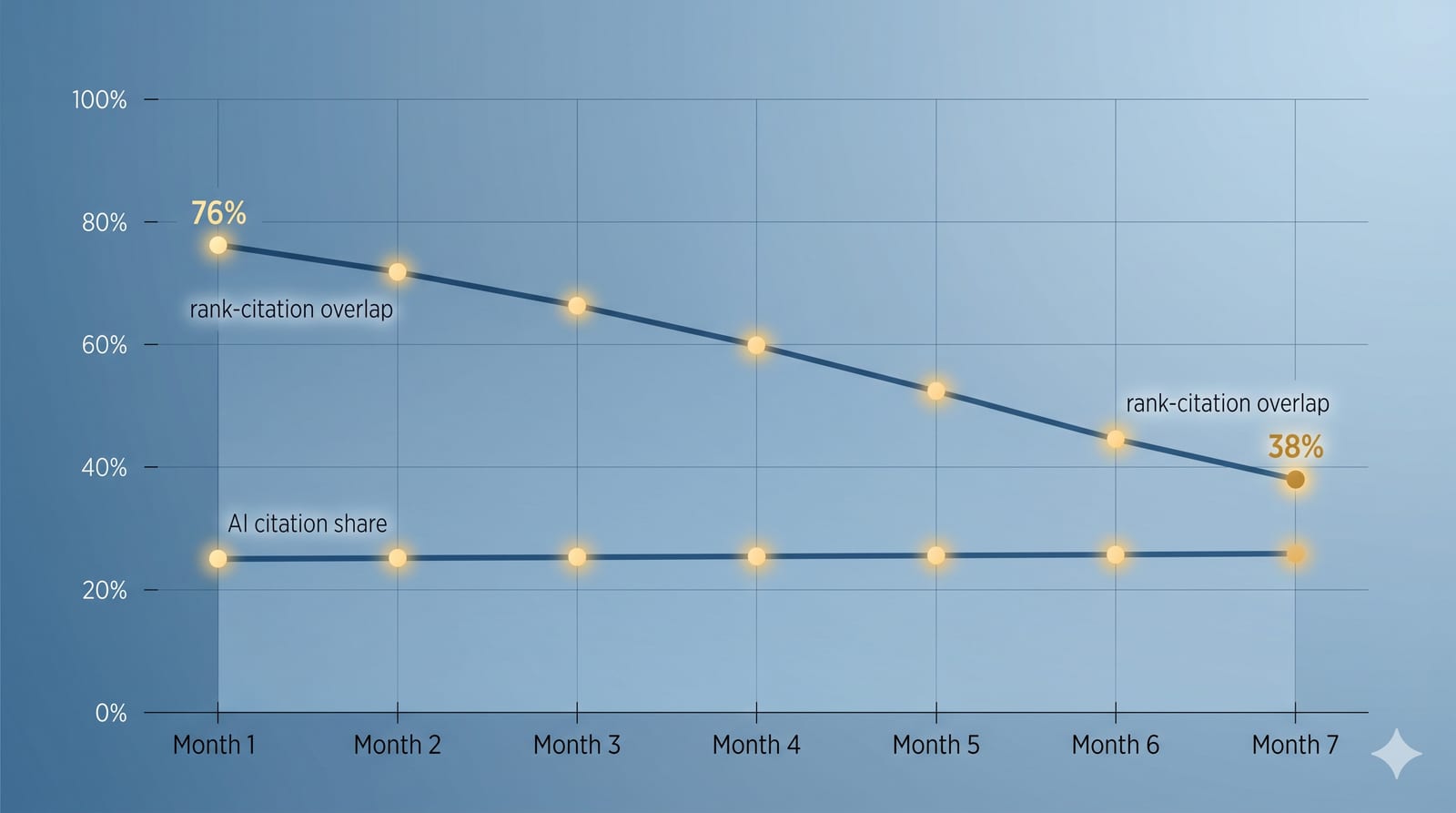
The connection between rank and AI citation has broken. Position 1 is now a checkpoint, not a destination.
There is a moment that happens in most boutique law firms right now. A managing partner notices the inquiry count is down. They open the rankings tracker. Every keyword they care about is still in the top 10. They ask their marketing manager why traffic is down despite the rankings. They get a confused answer. “We rank perfectly.”
That answer used to mean something. It doesn’t now.
The data is unambiguous. According to ALM Corp, in mid-2025, 76% of pages cited in Google AI Overviews also held a top-10 organic position. By early 2026, that correlation had dropped to 38%. Whatever AI uses to decide who to recommend, it is increasingly unrelated to traditional ranking signals.
What replaced rank as the signal? Independent verification.
AI engines need to confirm that the firm being recommended is actually who it says it is, that the credentials being attributed are real, and that the firm’s reputation can be cross-referenced across multiple independent sources. Your website tells AI who you say you are. Reddit, YouTube, LinkedIn, bar profiles, named-attorney press, and podcast appearances tell AI who other people say you are. AI weights the second set more heavily because it cannot be self-published.
The shift, well-summarized by Chip LaFleur at LaFleur Marketing: “Marketing success has been shifting from ‘Did we rank?’ to ‘Were we cited, summarized or referenced by AI?'” (Attorney at Work, 2026).
If your firm’s authority lives only on your own domain, you are at the wrong address.
What AI Engines Actually Read From
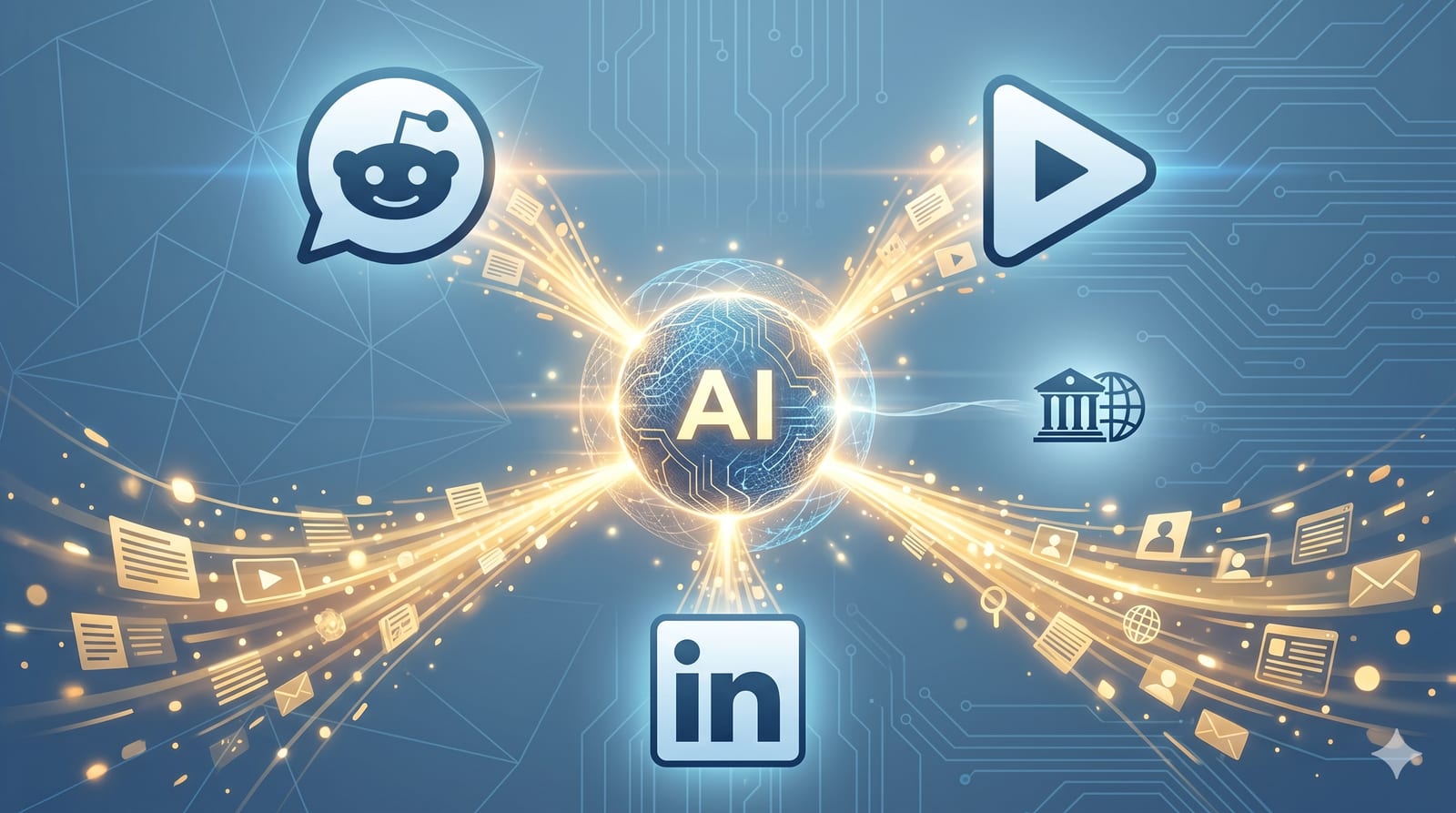
Reddit, YouTube, and LinkedIn are the three most-cited surfaces in AI answers. None of them are law firm websites.
If you walked into the AI search engine room and asked it where credentials live, it would point to four places before it pointed to a law firm’s homepage.
The most-cited domains in AI-generated answers, per Peec AI’s 2026 study, are Reddit, YouTube, and LinkedIn, in that order (Search Engine Land). For Perplexity in particular, LinkedIn is heavily weighted because the professional context provides verification structure AI can parse. For Google AI Overviews specifically, YouTube and authoritative directories sit at the top of the citation hierarchy (SaaS Intelligence).
What unifies these surfaces is third-party verifiability. A Reddit thread is an authentic conversation AI cannot fake. A YouTube transcript is content with an embedded source signal. A LinkedIn post is published in a structured professional context with verifiable attribution.
The asymmetry is uncomfortable: your own website is the surface you control, and it is the surface AI weights least. The surfaces AI weights most are surfaces you have less control over.
The implication for boutique law firms is direct. Citation work isn’t website work. It is presence work across the surfaces AI reads from. Generic “post on LinkedIn” advice doesn’t help here. The specifics matter. Named attorney bylines on Above the Law, Law360, ABA Journal. Podcast appearances on Legal Talk Network or Lawyers Have Lives. Genuine participation in r/Lawyertalk or r/SmallBusiness, where the partner’s expertise reads as expertise rather than promotion. YouTube transcripts of partner commentary on practice-area developments, written for transcription, not for entertainment.
This is what “off-page” means now. It used to mean backlinks. Now it means citation surface.
Why Big Law Wins This By Default, And Why Boutiques Can Reverse That
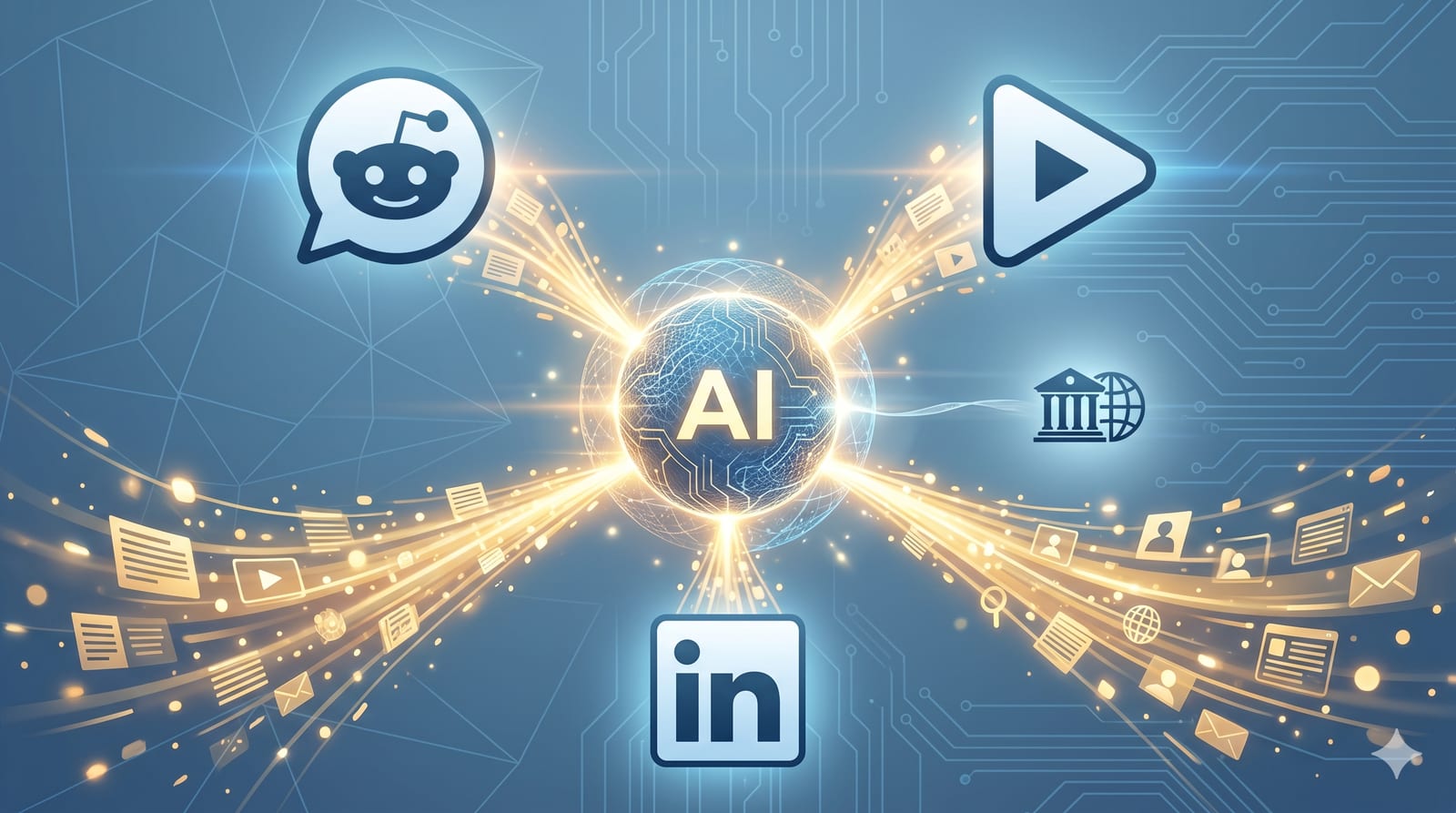
Big Law has citation density. Boutiques have citation precision. The right structural play is depth, not breadth.
Big Law firms have a structural advantage in AI citation that boutique firms cannot replicate at scale. Hundreds of attorneys generate authored articles, conference appearances, named press quotes, and panel speeches across the year. That volume creates a baseline density of third-party citations that AI will surface by default. According to Visibility 360, only 27% of even top-ranked firms appear in AI recommendations when asked about specific practice areas. That 27% is overwhelmingly Big Law.
This is the question every boutique partner asks at this point: if we can’t out-produce Big Law on citation volume, what’s the play?
The play is precision over volume. AI search rewards topical depth and entity consistency more than it rewards sheer breadth. As JustLegal Marketing puts it: “a solo practitioner with highly specialized, jurisdictionally accurate content can routinely outperform larger generalist firms in AI citations.” The boutique that produces 12 deep authored pieces a year on a single practice area is better positioned for citation than the Big Law firm that produces 200 generic pieces across 20 areas.
What this requires operationally is a content discipline that contradicts the default Big Law model. Pick the two or three areas the firm actually leads in, and own them with named-attorney depth across surfaces. Decline the “we cover everything” temptation. Make the firm’s citation footprint match its actual specialization, not its aspirational scope.
The boutiques that figure this out first will own their practice areas in AI recommendations for the next decade.
The Regulatory Marketing Reality
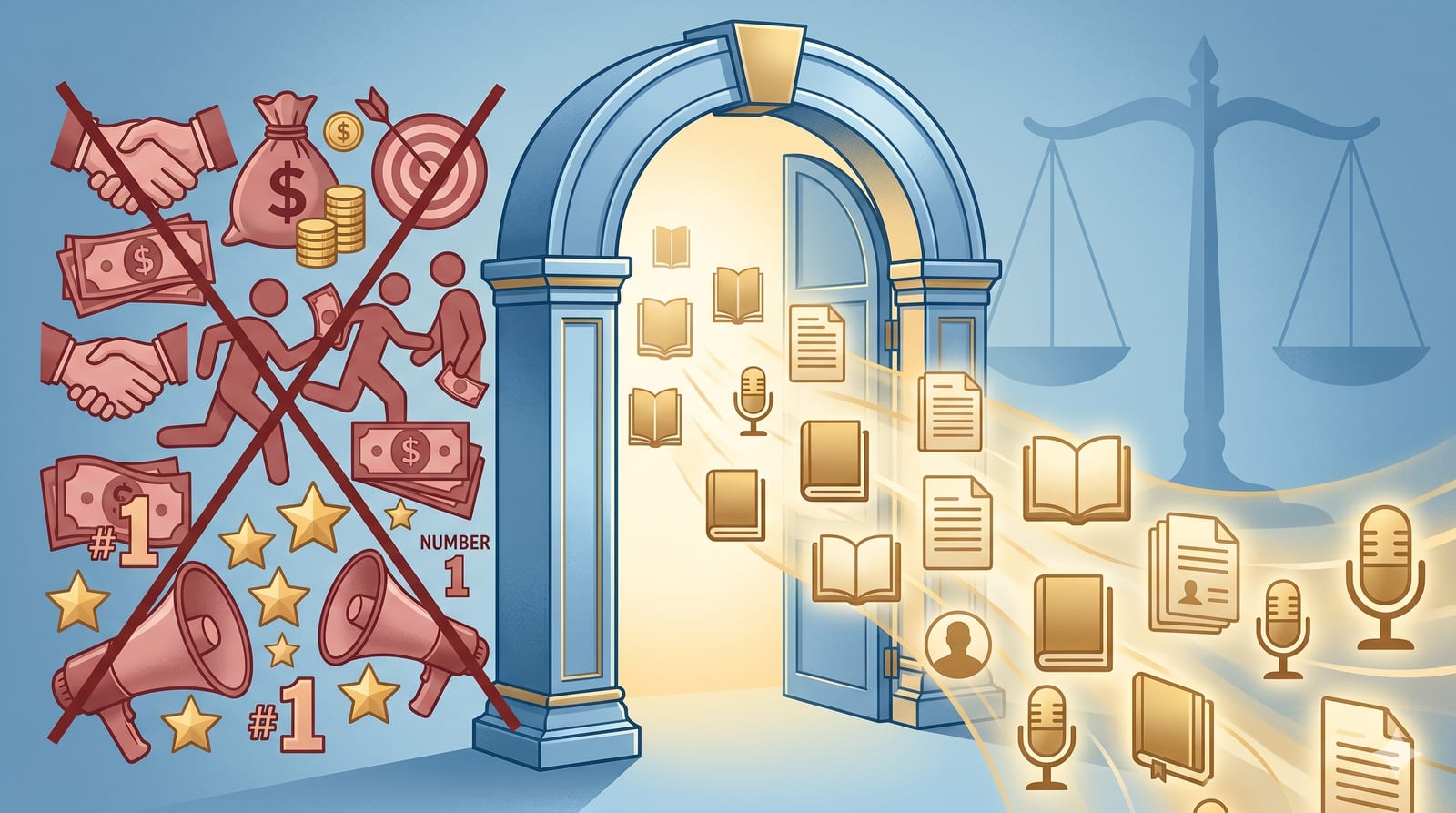
Most jurisdictions permit dignified educational content. The rules forbid solicitation, not visibility work. The two are different.
A partner reading the playbook above will raise the regulatory objection. Can we do this under our bar rules? In most cases, yes, and the rules are clearer than they’re often presented.
Take the Philippine Code of Professional Responsibility and Accountability, Section 17, as a worked example. The Supreme Court text forbids solicitation, paid placement for publicity intended to attract legal representation, and self-laudatory advertisement. It does not forbid factual self-identification, biographical content, descriptions of practice areas, or educational content. Reconciling NAP across directories is factual self-identification. Authored thought leadership on a practice area is biographical and educational. Named-attorney podcast appearances are professional discussion, not advertising. None of these violate the rules.
The same architecture appears in the US Model Rules of Professional Conduct (Rule 7.1 through 7.3 series), the UK Solicitors Regulation Authority Code of Conduct, and Singapore’s Legal Profession (Professional Conduct) Rules. Each forbids solicitation and undignified promotion. Each permits factual, biographical, and educational content. The boutique that “doesn’t market under bar rules” is usually protecting itself from rules that don’t actually prohibit the work that matters.
This matters because the regulatory layer is exactly what AI search rewards. AI engines treat dignified, educational, factual content as a positive signal. Solicitation language and price-driven advertising read as low-trust signals. The legal-marketing rules and the AI-citation playbook are pointing in the same direction. The boutiques that hear “we can’t market” as the end of the conversation are leaving citation gains on the table that the rules themselves invite.
What Boutique Firms Should Do Now
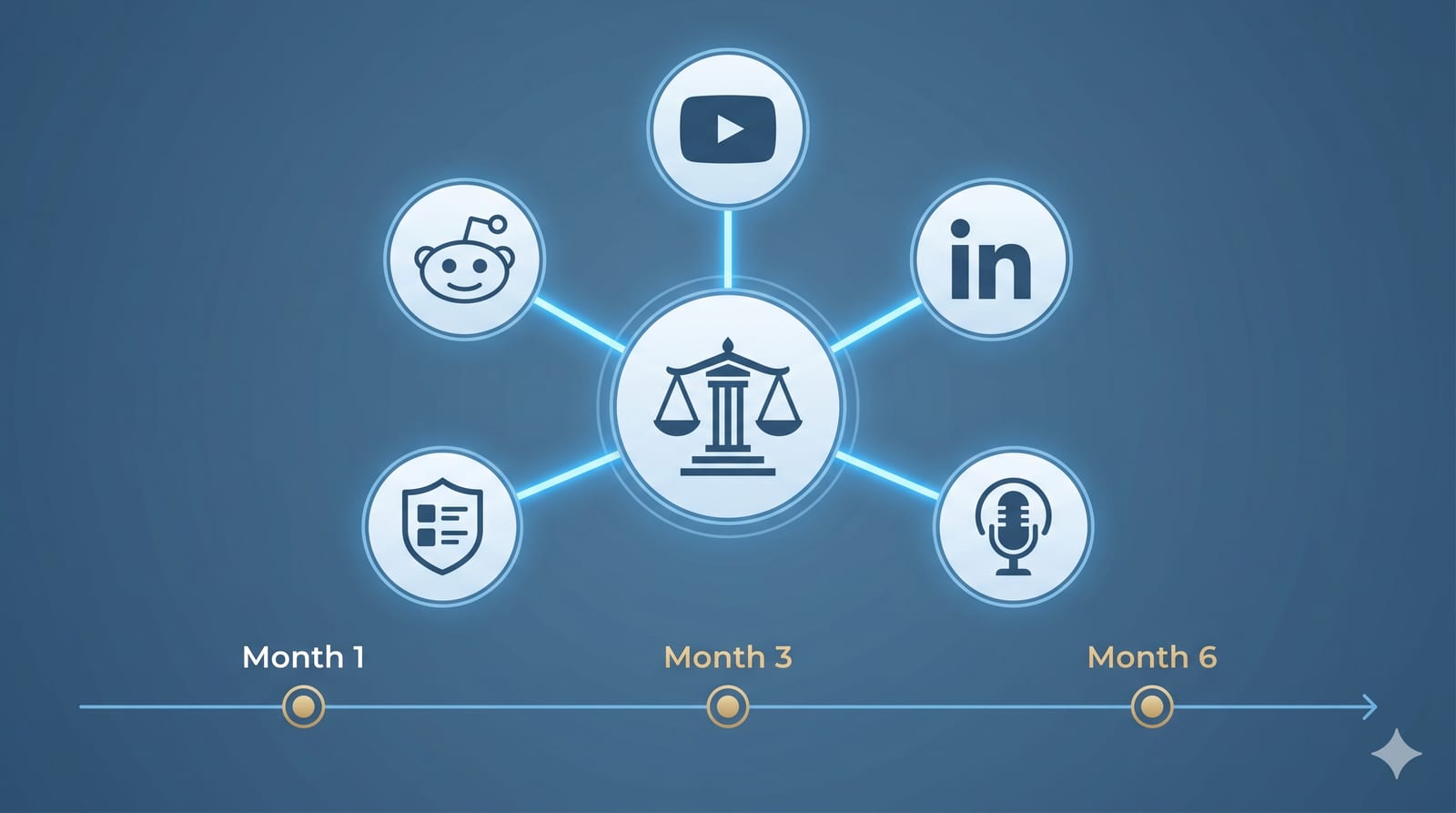
Build citation surface across five channels in parallel. Defend your own domain with proprietary content AI cannot pull from a directory.
Two things have to happen in parallel for a boutique to reverse the directory funnel. The first is citation surface work, where the firm’s authority gets built across the surfaces AI reads from. The second is on-domain defense, where the firm’s own site holds content distinctive enough that AI cites the firm directly rather than the aggregator.
The five-channel citation surface playbook:
- Reddit, where authentic expertise reads as expertise. Partners or senior associates participate genuinely in r/Lawyertalk, r/LegalAdviceOfftopic, r/SmallBusiness, or practice-area-specific subreddits. Answer questions with substance. No marketing, no astroturf. The participation has to be real, and over time, the named contributor becomes a citation source.
- YouTube, where transcripts feed AI directly. Partner-on-camera commentary on practice-area developments, recorded for clarity and transcribed accurately. AI parses spoken content. Titles carry the target keyword. The structural choice matters more than production value.
- LinkedIn, where professional context provides verification. Named-attorney thought leadership published directly to LinkedIn, not just cross-posted. Long-form posts (600 to 900 words) on practice-area developments, with the partner’s credentials visible in profile context. Perplexity weights this heavily.
- Directory profiles, with strict NAP consistency. Avvo, Martindale-Hubbell, Justia, and FindLaw treated as canonical records, not afterthoughts. Address, phone, business name match the firm’s website exactly. Discrepancies, even cosmetic ones, are the leading cause of entity fragmentation that makes 73% of firms invisible to AI (Esquire Interactive, 2026).
- Podcast pitching for named-attorney appearances. Legal Talk Network, Lawyers Have Lives, ABA Journal Modern Law Library. Each appearance generates an external authority signal AI can cross-reference. One appearance is worth more for AI citation than ten generic blog posts on the firm’s own site.
On-domain defense: alongside the surface work, the firm’s own site needs proprietary content that AI cannot extract from a directory listing. Specifically, jurisdictional commentary on recent developments, anonymized case outcomes, named-attorney bylines on every piece, and structured FAQ content that addresses real client questions. This is what makes AI cite your firm rather than the directory that lists your firm alongside ten others.
The playbook is months of consistent work, not a campaign. Firms that approach AI search as a 90-day push will be disappointed. Firms that build the surface incrementally over six months will start to see direct citation by month three, with measurable share-of-voice by month six.
What’s Next: From Visibility to Citation
The shift is structural, not cyclical. The firms that internalize it now will define the boutique landscape for the next decade.
Rank #1 used to be the destination. Now it is a checkpoint on the way to citation. The firms that figure that out first will shape what the boutique professional services landscape looks like in 2030.
What changes when this lands isn’t the marketing function. It is the firm’s relationship with its own positioning. The credentials, the bench, the practice-area focus, the regulatory mastery, all of these now need to be legible to AI as well as to clients. The firms that have spent the last decade building distinctive expertise are well-positioned for this. They have the substance. What they need is the citation surface architecture to make AI verify it.
The firms still managing their visibility through traditional SEO retainers, watching their rankings hold while their inquiries drop, are watching the future arrive and not naming it.
Where to Start
If your firm is ranking but not being cited, the answer isn’t more SEO. It’s a different kind of work, built on a different set of surfaces, defended by content that AI cannot pull from anywhere else. The mechanics are knowable. The work is operational.
Engine Pro is built for boutique professional services firms working through exactly this transition. It covers citation surface architecture, entity-consistency work across the eleven surfaces AI reads from, and proprietary on-domain content AI engines actually cite. All inside whatever regulatory framework your jurisdiction requires. Talk to us about whether it fits.
If a diagnostic feels like the right first step, the 11-surface audit framework is documented in the companion post.
Frequently Asked Questions
Why is my law firm not showing up in ChatGPT?
AI platforms evaluate firms based on topical authority, structured formatting, and strong entity signals like NAP (Name, Address, Phone) consistency across the web. If your content is buried in dense paragraphs, lacks structured data, or your firm’s digital footprint is fragmented, AI cannot confidently identify you and passes over your firm. (Source: Clio, 2026)
How long does it take to get cited in AI Overviews or ChatGPT?
Initial visibility changes from tactical optimizations (updated stats, direct answers, structured content) often appear within 2 to 8 weeks. Building sustained share of voice across multiple AI platforms generally requires 3 to 6 months of consistent work. (Source: Dataslayer, 2026)
Do AI Overviews really affect law firm traffic that much?
Yes. Organic CTR for queries triggering AI Overviews has dropped 61% to 65%, and a site previously ranked #1 can lose up to 79% of its traffic if it appears below an AI summary. Legal queries trigger AIO at the highest rate of any vertical (77.67%), compounding the impact. (Source: Dataslayer + Best Lawyers)
Should we still invest in traditional SEO?
Yes. Traditional SEO remains the foundation for AI citation success. Over 76% of successful AI citations come from pages already ranking in Google’s top 10. SEO and GEO are complementary, not substitutes. (Source: JustLegal Marketing, 2026)
What is the difference between SEO and GEO for law firms?
Traditional SEO focuses on ranking higher in search results to drive website traffic. Generative Engine Optimization (GEO) focuses on structuring content and building off-site entity authority so AI platforms cite and recommend your firm within their synthesized answers. (Source: JustLegal Marketing, 2026)
Why is my firm being routed to directories instead of cited?
AI systems favor independent third-party recognition and trusted professional directories as safe central sources of truth. If your firm lacks distinct structured information, named-attorney authorship, and strong E-E-A-T signals on its own website, AI routes users to directory aggregators rather than citing your firm directly. (Source: Best Lawyers + Esquire Interactive)
Can we pay to appear in AI Overviews?
Not currently. AI Overviews don’t accept paid placement. Citations are selected based on perceived authority, peer-reviewed recognition, and data verification, not paid advertising. Google is testing sponsored content and AI-powered shopping ad formats that may appear within the AIO interface in future. (Source: Dataslayer)
How do I check if my firm is being cited by AI?
Manually test your top practice-area queries across ChatGPT, Perplexity, and Google AI Overviews to observe whether your firm is recommended or cited. Third-party tools like Ahrefs Brand Radar, SE Ranking’s AI Overview tracker, and Semrush’s AI Visibility toolkit provide automated citation share-of-voice tracking. (Source: Attorney at Work, 2026)
Why is Big Law getting cited and boutique firms aren’t?
AI search levels the playing field by prioritizing niche expertise and entity consistency over marketing budgets. Boutiques often fail because of entity fragmentation (multiple addresses, inconsistent profiles across the web). A boutique with tight niche content and perfect NAP consistency can routinely outperform large generalist firms in AI citations. (Source: JustLegal Marketing + Clio)
Does AI invisibility affect referred clients too?
Yes. The modern legal consumer journey almost always includes a verification phase where even referred clients turn to AI assistants to research the firm before the first call. If your firm lacks strong third-party reviews, consistent directory profiles, or verifiable credibility signals, AI verification can filter you out, and the referrer never hears why the prospect went elsewhere. (Source: Esquire Interactive + Martindale-Avvo)
By Mark Buraga, Independent SEO Consultant at Growth Engine PH. Last updated 2026-05-14.
Work with us: explore Growth Engine PH SEO services, built to earn AI citations and rankings.
Related reading: What is SERP optimization and the 6-Block GEO Diagnostic.